
The Wabash Pastoral Leadership Program (WPLP) is a two-year, early-career, mentoring program for Indiana pastors. Because my research focuses on demographics and religious change in Indiana, I have spoken to all nine WPLP cohorts, and I routinely join their annual alumni reunion.
Through these twenty years, I have learned that most pastors do not experience the world the same way I do, and that is a helpful reminder for anyone who sets out to understand a congregation and the context in which it is working
My first response to new information is usually analytical. I want to know how many, what kind, and how much it cost. The pastors see things narratively. They want to know who was involved, what were they like, and how they were affected. They see what individuals do and what they care about. I often see individuals as “instances” of structures and forces much bigger than themselves.
An Experience in the Field
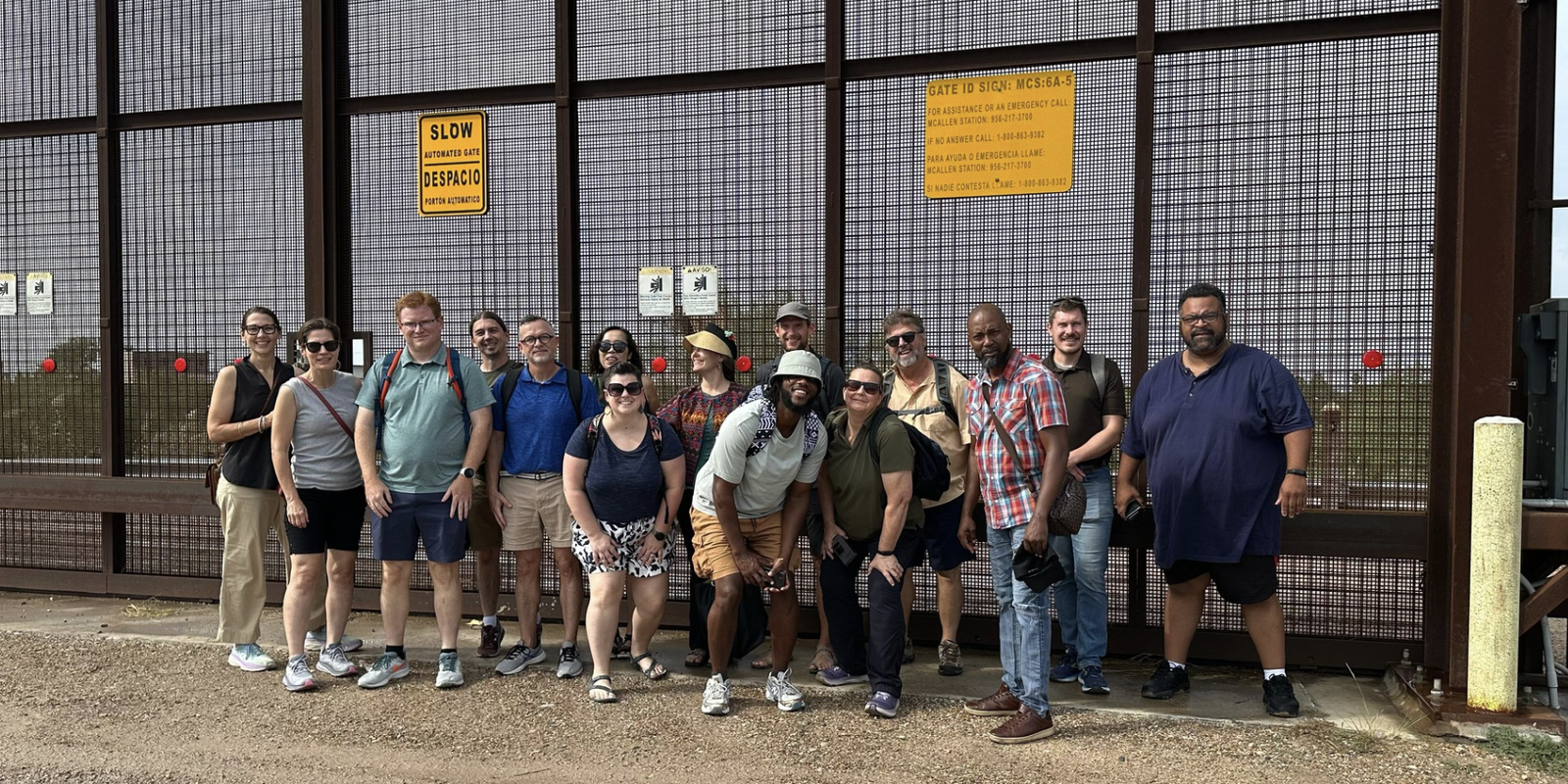
In October 2025, I accompanied the current cohort of pastors in the WPLP to the Texas/Mexico border to learn about immigration, especially by refugees and asylum seekers. At the end of the trip, we were each asked to offer our reflections. The pastors talked about
“God reaching out and calling people…in their particular context, and through their unique lens and lived experience.” They were struck by “the story of God nudging a pastor to continue caring for refugees.” They remembered a worker who said God asked him, “What will the refugees eat for breakfast?” and then “used his last $7 to buy tortillas, eggs and chorizo, with only a quarter left.” For the pastor recounting this memory, it was “reminiscent of the feeding miracles—you give them something to eat.”
My excerpts in the same summary document look quite different:
“The director of Baptist Missions said that effectively ALL the students at University of Texas Rio Grande Valley are Catholic. He estimated that “If he serves 1,000 students, no more than 60 are actually Baptist.” My notes then add, “In Hidalgo County, Catholics are a larger share of the population, 47%, than all religions combined in Indiana, 42%, according to the US Religion Census.”
We were seeing and hearing the same things, but we were not absorbing the information in the same way.
“We were seeing and hearing the same things, but we were not absorbing the information in the same way.”
Why It Matters?
Anyone who supports research on a congregation is likely to expect it to be useful.That process of turning data into useful information is a shared task, but the primary responsibility falls to the researchers. It is our job to “storify” data in some way using anecdotes and graphics. This creates a special burden to make sure our examples are truly representative. When we use an anecdote or visual aid, it is important that we remember this is what will stick.
And it is often our own experiences in the field that help us do that. Even after speaking with nine different cohorts and hundreds of pastors in interviews and focus groups, this short time observing a new experience and a new set of information along the border clarified the difference for me in a way nothing else could.
Note: For helpful hints on Making Observations and on Using Photos & Videos, see our Toolkit.